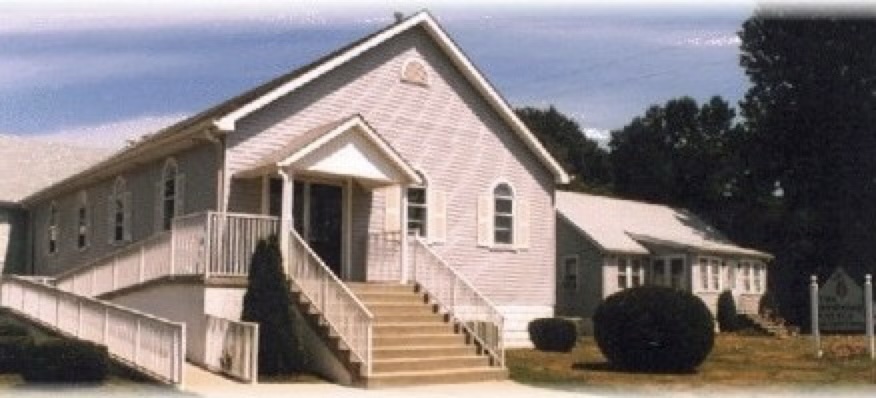
The Carneys Point Wesleyan Church was birthed through the seed-faith efforts of Mrs. Mary Kemp, who began a Sunday School in the living room of her home on Jefferson Street on August 25, 1917. That same year, the Rev. Henry W. Hawkins moved to Penns Grove. He began to assist Mrs. Kemp in her home-based ministry. Rev. Hawkins was appointed the pastor of the fledgling church in 1919.
On February 17, 1921, the Wesleyan Methodist Church of Carneys Point petitioned the North Carolina Conference, requesting permission to organize a mission conference. On April 14, 1921, the Middle Atlantic States Conference was officially organized with four churches forming the nucleus of the infant conference: Carneys Point, Jersey City, Vineland, and Wilmington (DE). In 1968, the Wesleyan Methodist denomination merged with the Pilgrim Holiness Church, forming The Wesleyan Church. The congregation then adopted the new denomination’s name and became known as the Carneys Point Wesleyan Church – a member of the Penn-Jersey District of The Wesleyan Church.
The church has utilized several locations throughout its history. From Jefferson Street it moved to several private homes, including a house near DuPont Road and Lafayette Street and a home on Ash Street in back of the Y.M.C.A. For a time, they also met in the basement of the Lafayette School. For ten years prior to the erection of the church building, they met in a bungalow on Bay Street in Carneys Point, which was owned by the DuPont Company.
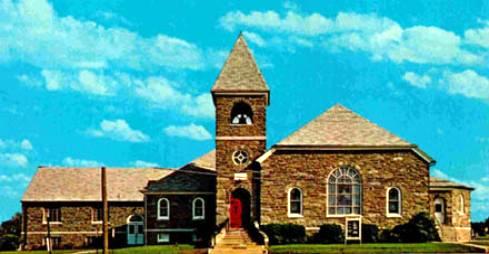
In 1938, the present edifice on Georgetown Road was built with an upstairs sanctuary and a basement devoted to several Sunday School classes. The parsonage was erected in 1939 next to the church. Both projects were completed due to the tireless efforts of the men of the congregation.
During the early 1960s, the congregation grew, thus creating a need for more space. The church built an addition, which provided a larger sanctuary, additional classrooms, and an all-purpose room in the basement. In the 1970s, a kitchen was added. Classroom improvements and the purchase of new buses were made during the 1980s. And in the early 1990s, the outer complexion of the church changed as the gray slate shingles were replaced with gray siding.
Spiritually, the congregation has had a great impact in this community. Ministry to teens flourished during the 1970s and 1980s as the church became a center for youth ministry for the Penn-Jersey District. Throughout its history, the church has been opened for use by various community groups, including the Boy Scouts and Alcoholics Anonymous.
Today, this congregation continues to faithfully serve Christ. Their focus is to reach the community with the love of Christ through programs designed for people of all ages.