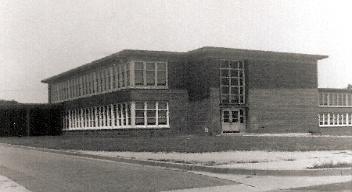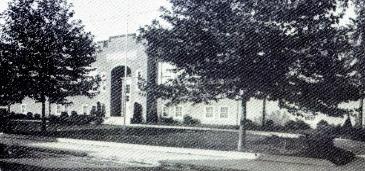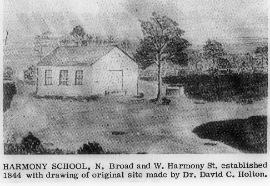
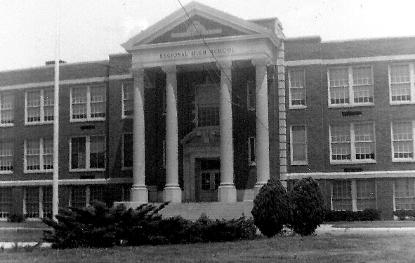
Until the 1700s most children were schooled at home by their parents in Salem County. By the early 1700s formal education was being provided by religious groups, primarily the Society of Friends at first, but then by other denominations. As the population grew, private academies and home schools increased. By the late 1700s there were several school districts in the county. These were funded through a system where citizens banded together to build a school and hire a teacher and students were charged a daily tuition to attend. Pupils were expected to supply their own textbooks, which in many cases turned out to be whatever books they had in their home. In 1816 the New Jersey legislature created a fund for the support of public schools. By 1829, interest from the fund began to be apportioned to the school districts. The districts had gained state approval to levy taxes for public schools in 1820. In 1828 they were also given permission to raise money for capital purposes, including the building and maintenance of schools. The first State Board of Education was created in 1866 with Ellis A. Apgar as State Superintendent. Under his leadership “An Act to Establish a System of Public Instruction” was adopted in 1867. This act mandated a minimum school year of five months and created boards of trustees in local school districts. Under this act an annual enumeration of school-age children was created, an annual town meeting for deciding school taxes was established and the position of County Superintendent was instituted. By 1871 the Legislature had adopted laws which increased the State’s financial aid to school districts. Laws also required that if these funds were not sufficient, the local districts must raise enough funds to provide nine months of free education to any child between the ages of five and eighteen who desired schooling. In 1871 Salem County was home to approximately sixty-five school districts. Most were one or two room buildings heated by wood stoves and none had indoor plumbing. The early years were plagued with attendance and discipline problems, as well as health issues. Communicable diseases were prevalent and sanitary conditions were poor. Water came from wells which sometimes were closed when testing showed the water unfit for consumption. Also, many schools were without any outhouse facilities. State Superintendent Apgar pushed for improvement in these areas and soon most districts saw improvements. Irregular attendance was a hindrance to education. Many children were kept home to work or provide assistance around the home. In 1874 a law was passed requiring children to attend school. In 1894 two laws were passed which greatly aided education. The first was “The Free Textbook Act” which shifted the burden of providing textbooks to the district instead of to the student. The second was “The Township Act” which aligned the boundaries of the school districts to match that of the township. With this law a township Board of Education replaced the individual district boards. This consolidation of school districts led to the abandonment of one and two room schools, as it was easier to maintain a centralized building containing many classrooms. With the twentieth century came many changes. Kindergartens were established and districts were encouraged to hire a superintendent or supervising principal. In 1903 districts were granted permission to open evening schools and were allowed to hire business managers. High school level classes were available throughout the county and by 1910 Penns Grove, Salem and Woodstown each had a High School building. World War I brought an influx of workers to the area's DuPont plant thus greatly increasing the school populations and the need for additional classrooms. After the war salaries for teachers rose and the number of students completing high school increased. The Great Depression brought difficulties to the local school districts. Budgets were cut, salaries reduced and some programs were halted. Government recovery programs such as the WPA and PWA provided aid to education across the country. These programs helped with building upkeep and new construction, including that of the Regional High School in Penns Grove. A major change occurred after the passage of a state law in 1945 forbidding discrimination in education. Most of the districts in Salem County had Negro schools and as a result these schools had to be closed and the students integrated into the previously all-white schools. Due to spacing constraints compliance was slow with many buildings requiring additions. The period of 1945 to 1955 saw several county school buildings acquiring additions. The 1960s saw an increase in student rights and responsibilities, relaxed dress codes and an increase in communication between students, staff and parents. There was also an effort to increase the diversity of school personnel. With the following decades came changes in scheduling, course offerings and extracurricular activities among other things. In many areas there was a shift from neighborhood-based schools to grade-level schools. Now districts work to provide a better education to special need students by use of aides, specialized course work and child study teams. Facilities have been upgraded to provide accessibility to the handicapped, improved science labs and modern resource rooms. Workshops in diversity, sensitivity and conflict resolution are among the things included in the modern curriculum. The area of education has seen many changes and much progress over the years and it is certain that the future will bring more revisions.